
Measure existing conditions before buying.
Extend downspouts away from foundations
Detailed DIY guide to extend downspouts away from foundations, with calculator, tools, materials, quality checks and common mistakes.
Prepared by RenoAtlas.ca · Content reviewed: 2026-08-02 · editorial method

Forgetting waste, access and hidden services.
Permit, structure or regulated system.
Calculate
Budget estimator
Enter local prices or quotes in Canadian dollars. No data is sent to a server.
Specialized equipment
All ratesPossible rentals for this project
Plate compactor
Confirm capacity, accessories, transport, deposit, fuel and damage waiver.
Rogers Rent-AllCalgary, AB · 2026-08-01
4 hr60.00 $Day75.00 $Week275.00 $Month600.00 $
Dated snapshotAble Equipment RentalsBurnaby, BC · 2026-08-01
Day45.00 $Week180.00 $Month450.00 $
Older guide — verifyDawson RentalsWinnipeg, MB · 2026-08-01
Half day40.00 $Day60.00 $
Dated snapshotBenchmark RentalsSaskatchewan, SK · 2026-08-01
4 hr50.00 $Day75.00 $Week280.00 $Month775.00 $
Dated snapshotMini excavator
Confirm capacity, accessories, transport, deposit, fuel and damage waiver.
Able Equipment RentalsBurnaby, BC · 2026-08-01
Day200.00 $Week800.00 $Month2,400.00 $
Older guide — verifyWalk-behind trencher
Confirm capacity, accessories, transport, deposit, fuel and damage waiver.
Dawson RentalsWinnipeg, MB · 2026-08-01
Day165.00 $
Dated snapshotRates often exclude tax, delivery, fuel, accessories, deposit and damage waiver. Confirm before booking.
Respiratory protection
Full mask guideSelect for the hazard, never by appearance
Possible hazards
- possible respirable crystalline silica
exposure control planp100 if selected
Priority controls
- Eliminate or reduce dust/vapour at the source before relying on a respirator.
- Use appropriate wet methods, HEPA capture, local exhaust and isolation.
- Read the SDS and exact product instructions.
What is not sufficient
- A mask alone does not replace wet cutting, capture and exposure assessment.
Stop if
- Stop if a visible dust cloud persists or source control fails.
Final selection depends on contaminant, concentration, SDS, fit and the applicable program. An air-purifying respirator does not supply oxygen.
Conceptual illustrations
Original conceptual illustrations; HTML text and the exact product data sheet prevail.
Dimensions, clearances, times and products specified by the exact manufacturer replace any general value.
Prepare the project
- Observe flow during rain and identify a safe discharge point.
- Verify water will not be sent to a neighbour, an icy walkway or a foundation.
- Confirm local rules before connecting to any network.
- Photograph the initial condition and record important measurements or defects.
- Confirm the exact product data sheet, ambient conditions and wait times.
Tools to plan for
- ●Tape measure
- ●Level
- ●Suitable hand tools
- ○Portable work light (optional)
- ○Phone or camera for documentation (optional)
Protective equipment
- Safety glasses
- Suitable gloves
Detailed execution
Illustrated steps
HTML text is the reference; images clarify the action and sequence.

1
Observe water during rain and choose an outlet that truly
Treating the symptom without the cause often makes the problem return.
- Observe water during rain and choose an outlet that truly moves water away from the foundation.
- Photograph and record the location, frequency and conditions when the problem appears.
- Test one hypothesis at a time using the least destructive method available.
- Compare the result with a sound area or manufacturer documentation.
Quality check
The likely cause matches observations and the test performed.
Stop if
Stop for a burning smell, major active leak, extensive mould or structural damage.
2
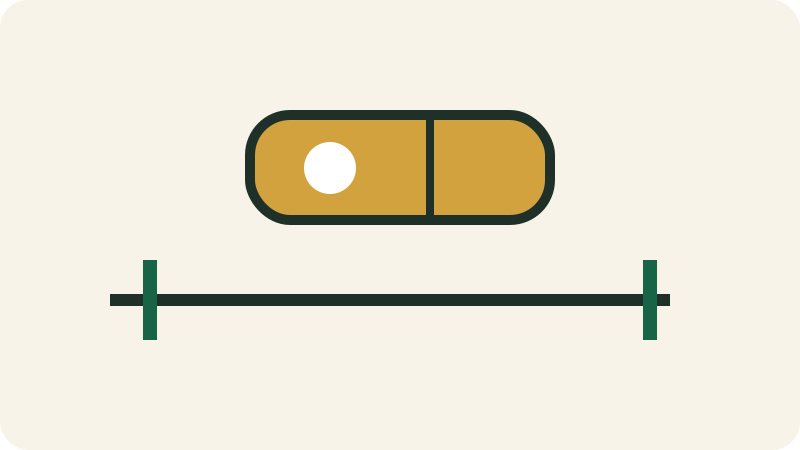
Measure the route, verify slope and avoid walkways, neighbours, openings
A starting error repeats across the entire installation.
- Measure the route, verify slope and avoid walkways, neighbours, openings and icing zones.
- Measure each dimension at least twice and verify square, level or slope as appropriate.
- Mark reference lines independent of walls that may be irregular.
- Dry-fit the first pieces and adjust the layout to avoid an overly narrow final piece.
Quality check
Marks are visible, consistent and confirmed by a second measurement.
Stop if
Stop if variations exceed what the product or method can accommodate.

3
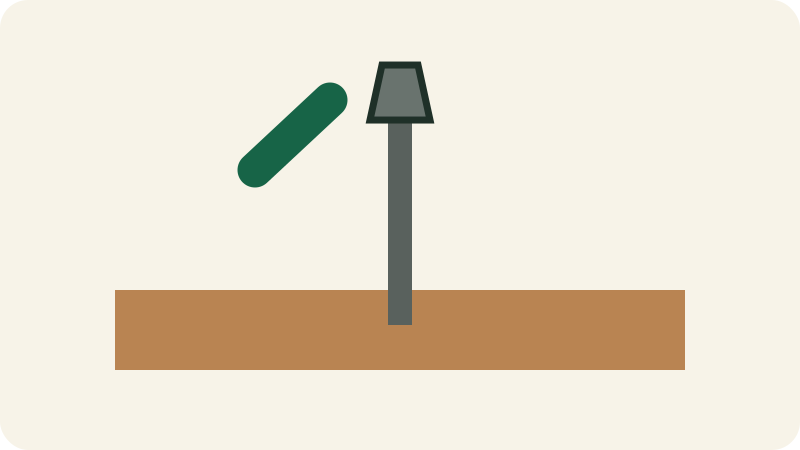
Clean and repair the downspout, then connect a compatible extension
Dust, grease and residue reduce adhesion and hide defects.
- Clean and repair the downspout, then connect a compatible extension without reducing section.
- Remove large debris, then vacuum with a suitable filter.
- Use a cleaner compatible with the substrate and rinse when required.
- Allow the surface to dry fully before coating or bonding.
Quality check
A clean white cloth picks up almost no dust or grease.
Stop if
Stop if stains return, the substrate remains damp or an unusual odour persists.
4
Secure the extension for wind and maintenance while keeping joints
Correct fastening maintains alignment while allowing intended movement.
- Secure the extension for wind and maintenance while keeping joints accessible.
- Locate backing and choose compatible fastener length, material and head.
- Pre-drill near ends or in materials prone to splitting.
- Fasten from centre toward ends or per manufacturer sequence without overdriving.
Quality check
Pieces remain straight and stable with no cracks, bulges or protruding fasteners.
Stop if
Stop if reliable backing is unavailable or a fastener could hit a hidden service.

5
Test with water, observe after heavy rain and correct erosion
A check before putting tools away allows small defects to be corrected.
- Test with water, observe after heavy rain and correct erosion or ponding.
- Inspect from several angles and lighting conditions, then gently test stability or operation.
- Photograph hidden areas, products, lot numbers and useful measurements.
- Clean up, remove protection at the proper time and record required maintenance.
Quality check
The result works, appears uniform and shows no leak, movement or visible damage.
Stop if
Do not conceal a defect; correct or document it before final close-out.
Final quality checklist
- The result is stable, clean and consistent with the product data sheet.
- Transitions and edges are finished without concealing a defect.
- Photos, leftover quantities and maintenance are recorded.
- Compare the result with initial photos and the product data-sheet criteria.
- Inspect from several angles and lighting conditions before putting tools away.
Common mistakes
Starting without a test
Consequence: An incompatibility is found too late.
Correction: Make a discreet test or dry-fit.
Concealing a defect
Consequence: The problem returns after finishing.
Correction: Correct and document before closing.
Ignoring instructions
Consequence: Warranty, adhesion or durability are compromised.
Correction: Use exact product values.
Check whether a price or quote makes sense
Compare materials, preparation, labour, rental, delivery, disposal, tax and contingency separately.
Often excluded
- delivery
- rental
- disposal
- hidden preparation
- touch-ups
Red flags
- lump sum without quantities
- no preparation described
- disproportionate deposit
- unidentified material or product
- no terms for unforeseen conditions
Indicative DIY hours: 6–12 h
To compare a quote, request quantities, labour rate or allowance, preparation, exact products, exclusions and the method for handling unforeseen conditions.
Maintenance and follow-up
- Inspect after the first week and after one season of use.
- Keep data sheets, photos and touch-up products.
- Correct small movement or joint issues before they worsen.
Inspection
Full defect libraryDefects to recognize before, during and after this project
Defects homeowners often encounter on this type of project. Some records use credited real photos; others use conceptual references. Symptoms and real-world context remain the reference.
Leaning, cracking or moving retaining wall
A retaining wall holds soil and sometimes loads; bulging, overturning or blocked drainage can precede failure.
- Leaning wall, bulge, open joints, shifted base, water or soil pressure.
Efflorescence, dampness and foundation seepage
White deposits on concrete indicate water migration that dissolves salts and leaves them behind as it dries.
- White powdery deposit, peeling paint, damp concrete or cellar odour.
- Vertical tracks on the foundation wall or a wet floor at the perimeter.

Sump pump that will not start, stuck float or backflow
A sump pump can appear fine until a power outage or heavy rain; testing should include float, check valve, discharge and backup.
- Pump silent despite high water, short cycling, vibration or water returning.
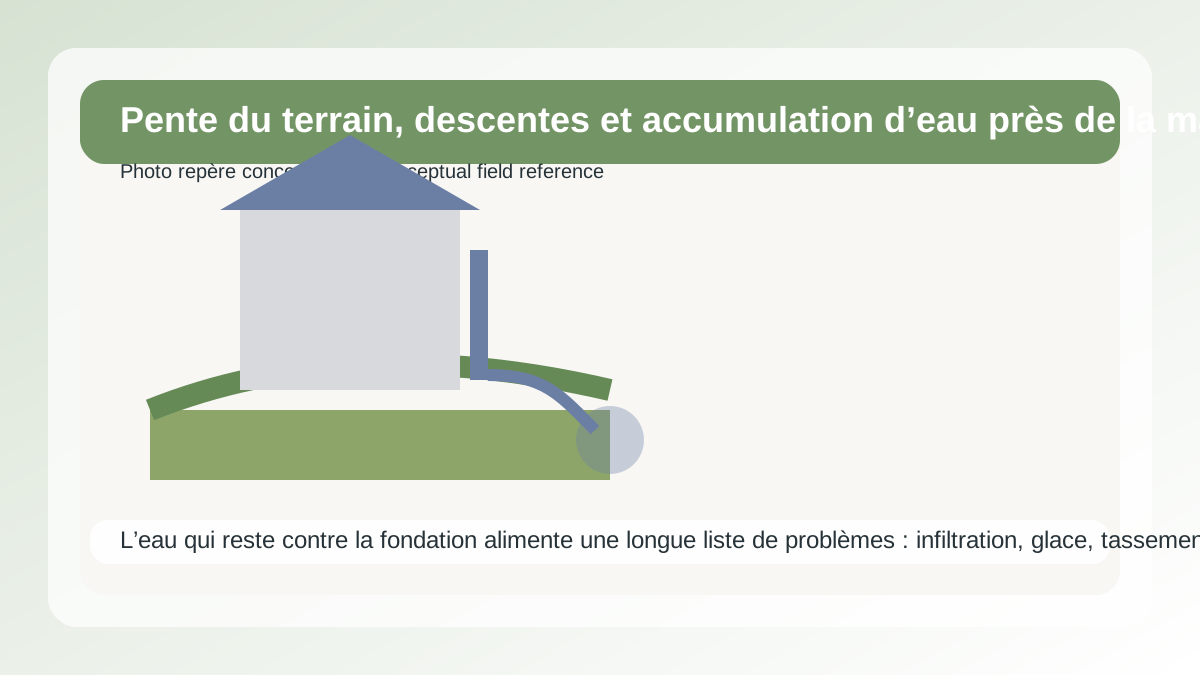
Grading, downspouts and water collecting near the house
Water that stays against the foundation feeds a long list of issues: leakage, ice, settlement, rot and premature deterioration.
- Persistent puddles, splash marks on lower cladding, sunken soil near the home.
- A downspout discharging at the wall, erosion, full window wells or recurring frost.
Understand the system
All guidesUseful guides for this project
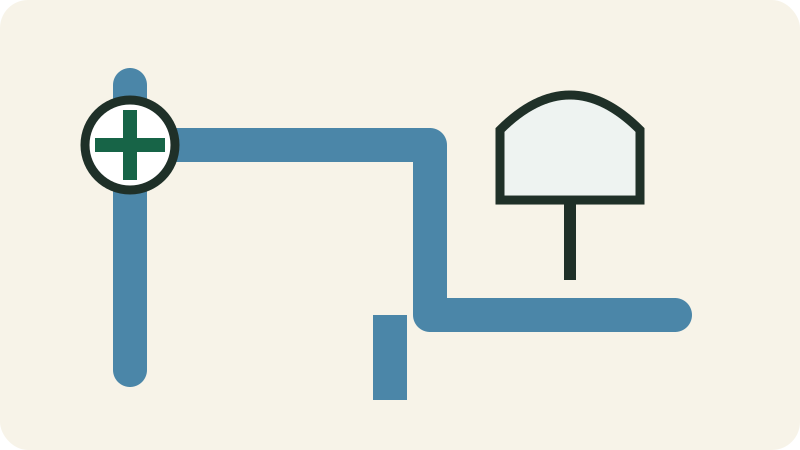
French drains, foundation drains and channel drains
Choose the right drainage system for surface water, groundwater and the available outlet.
Checked: 2026-08-01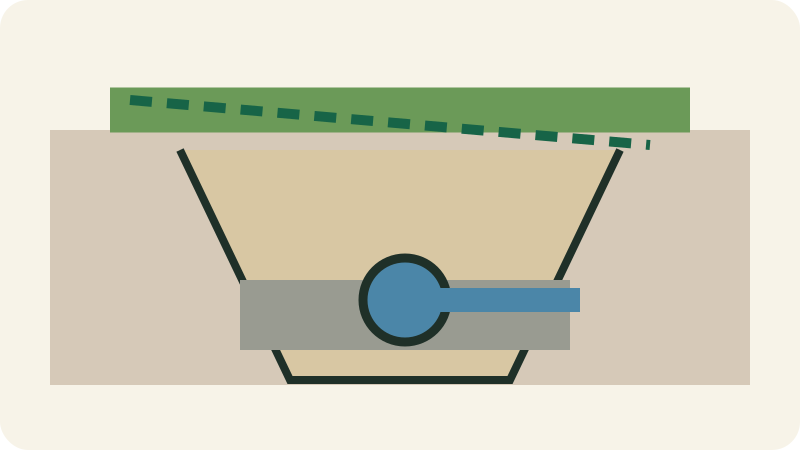
Asphalt, concrete, gravel or pavers: choose a driveway
Compare cost, drainage, frost, repairability, maintenance and base quality.
Checked: 2026-08-01
Lawn types for Canadian climates
Choose bluegrass, fescue, ryegrass, microclover or prairie by sun, water and use.
Checked: 2026-08-01Plan a pool, hot tub and cold plunge
Organize permits, barriers, base, equipment, energy, water and winterization before purchase.
Checked: 2026-08-01Related path
Continue with the right tools
These links connect this page to the next useful checks and decisions without repeating the full content.
Start from a symptomOrganize plausible causes, observations, urgency and the right professional.Open →Track water useCompare meter readings and flag unusual changes.Open →Review water resilienceConnect flooding, drainage and future events to building adaptations.Open →Score home resiliencePrioritize water, outages, fire, climate, health and records.Open →Plan site, drainage and utilitiesCoordinate access, water, sewer, wells, septic, grading and site constraints.Open →
Tools related to this issue
V14
Systems to check before closing the work
V14 connects envelope, air, fire, structure, water and code instead of treating each project in isolation.
V16
Advanced diagnostics to cross-check
V16 connects water, soil, climate, safety, materials and seasonal use to existing projects.
V17
Specialized systems to cross-check
V17 completes gas, soil, water, fire, climate and structural interfaces.
V18
Specialized diagnostics to verify
V18 connects systems that become costly or regulated when a primary project triggers them.
V19
Edge systems to integrate into the project
V19 covers interfaces that become important when multiple home systems interact.
V27
Project risks and overlooked interfaces
V27 connects payment, water, envelope, ventilation and jobsite details that often create costly surprises.
V28
Finish and service details to verify
V28 connects small details that become costly once finishes are closed.
V33
Invisible constraints before work
V33 checks electrical, legal, environmental and climate constraints that can block a project before demolition starts.
V34
Use, excavation and construction constraints
V34 connects use permits, soil, excavation, neighbouring structures and public-space logistics before hard-to-reverse work.