
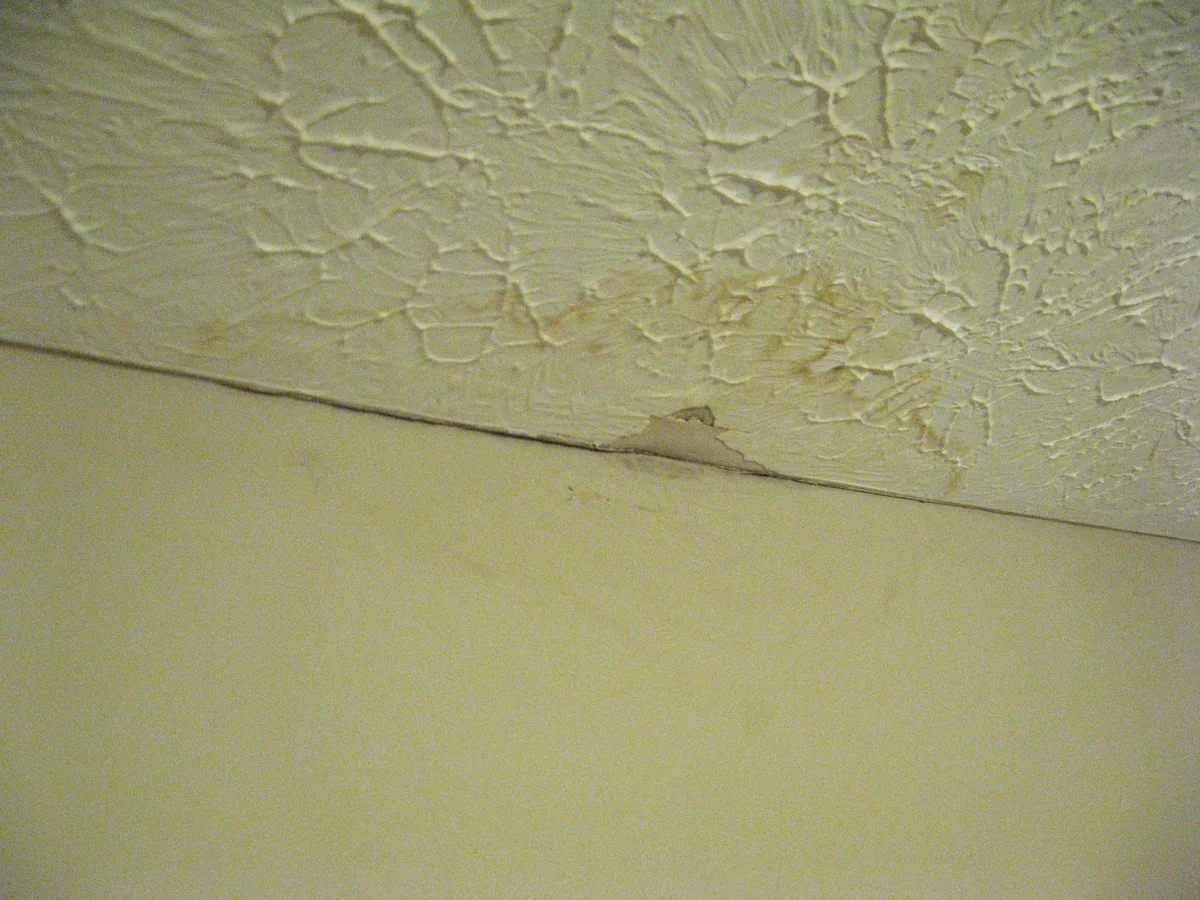

Typical signs
- Brown or yellow rings on ceilings or upper walls.
- Blistering paint, opening joints or soft drywall.
- Moisture readings higher than nearby surfaces.
- Musty odour or damage that returns after rain or appliance use.
Where it is often found
- Below bathrooms, around windows, below roofs, around chimneys and near appliances.
- Under sinks, behind toilets, around water heaters and in mechanical rooms.
What it can mean
- Failed flashing, membrane or exterior joint.
- Pressurized plumbing leak or drain leak.
- Recurring condensation caused by humidity, thermal bridging or poor ventilation.
What to check next
- Photograph the extent before opening.
- Compare after rain, showers, laundry or defrost cycles.
- Measure area moisture and follow the slope or penetrations above.
- Inspect roofing, flashings, exterior joints, plumbing and connected appliances.
Reasonable immediate actions
- Contain water, shut off supply or isolate the appliance if needed.
- Do not close a wet cavity until it is dry and the cause is identified.
When to stop and call a professional
- Water near an electrical panel, a bulging ceiling, an inaccessible roof area or a cavity with extensive mould.
- A leak that cannot be located or quickly returns after a local repair.
Prevention
- Maintain sealants, flashings, gutters and ventilation.
- Periodically check appliances, pans and water alarms.