
Measure existing conditions before buying.
Plan a concrete driveway
Understand, measure and plan: plan a concrete driveway.
Prepared by RenoAtlas.ca · Content reviewed: 2026-08-02 · editorial method
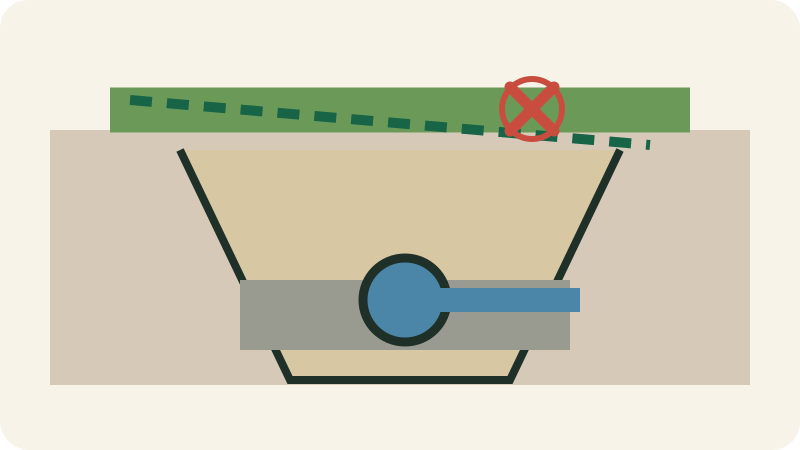
Forgetting waste, access and hidden services.
Permit, structure or regulated system.
Calculate
Budget estimator
Enter local prices or quotes in Canadian dollars. No data is sent to a server.
Dated prices
All pricesCompare before buying
| Retailer / product | Location / date | Price | Unit price | |
|---|---|---|---|---|
| 30 kg concrete mix | ||||
| CanacMélange à béton 30 kg | L’Ancienne-Lorette / Québec web price2026-08-01 | 5.10 $ / bag | 0.17 $ / kg | Verify |
| Home Depot CanadaSAKRETE concrete mix 30 kg | Online — default location not selected2026-08-01 | 6.98 $ / bag | 0.50 $ / L yield | Verify |
| RONAQuikrete ready-to-use concrete mix 30 kg | Online — default location not selected2026-08-01 | 6.98 $ / bag | 0.50 $ / L yield | Verify |
| 0–3/4 in gravel, 30 kg | ||||
| Home Depot Canada0–3/4 in gravel 30 kg | Online — default location not selected2026-08-01 | 3.88 $ / bag | 3.88 $ / bag | Verify |
Public observations only. Select your store and verify stock, taxes, delivery and current price.
Specialized equipment
All ratesPossible rentals for this project
Plate compactor
Confirm capacity, accessories, transport, deposit, fuel and damage waiver.
Rogers Rent-AllCalgary, AB · 2026-08-01
4 hr60.00 $Day75.00 $Week275.00 $Month600.00 $
Dated snapshotAble Equipment RentalsBurnaby, BC · 2026-08-01
Day45.00 $Week180.00 $Month450.00 $
Older guide — verifyDawson RentalsWinnipeg, MB · 2026-08-01
Half day40.00 $Day60.00 $
Dated snapshotBenchmark RentalsSaskatchewan, SK · 2026-08-01
4 hr50.00 $Day75.00 $Week280.00 $Month775.00 $
Dated snapshotMini excavator
Confirm capacity, accessories, transport, deposit, fuel and damage waiver.
Able Equipment RentalsBurnaby, BC · 2026-08-01
Day200.00 $Week800.00 $Month2,400.00 $
Older guide — verifyWalk-behind trencher
Confirm capacity, accessories, transport, deposit, fuel and damage waiver.
Dawson RentalsWinnipeg, MB · 2026-08-01
Day165.00 $
Dated snapshotRates often exclude tax, delivery, fuel, accessories, deposit and damage waiver. Confirm before booking.
Respiratory protection
Full mask guideSelect for the hazard, never by appearance
Possible hazards
- possible respirable crystalline silica
exposure control planp100 if selected
Priority controls
- Eliminate or reduce dust/vapour at the source before relying on a respirator.
- Use appropriate wet methods, HEPA capture, local exhaust and isolation.
- Read the SDS and exact product instructions.
What is not sufficient
- A mask alone does not replace wet cutting, capture and exposure assessment.
Stop if
- Stop if a visible dust cloud persists or source control fails.
Final selection depends on contaminant, concentration, SDS, fit and the applicable program. An air-purifying respirator does not supply oxygen.
Red phase — professional oversight
Foundations, drainage, concrete and groundworks
A red page does not authorize a homeowner to perform regulated or high-consequence work. It is for preparation, oversight, documentation and acceptance. Permits, sealed drawings, provincial/municipal rules, manufacturer instructions, inspections and required trades prevail.
Absolute limit
This page explains expected professional work and homeowner oversight; it does not provide a procedure for personally performing regulated or hazardous operations.
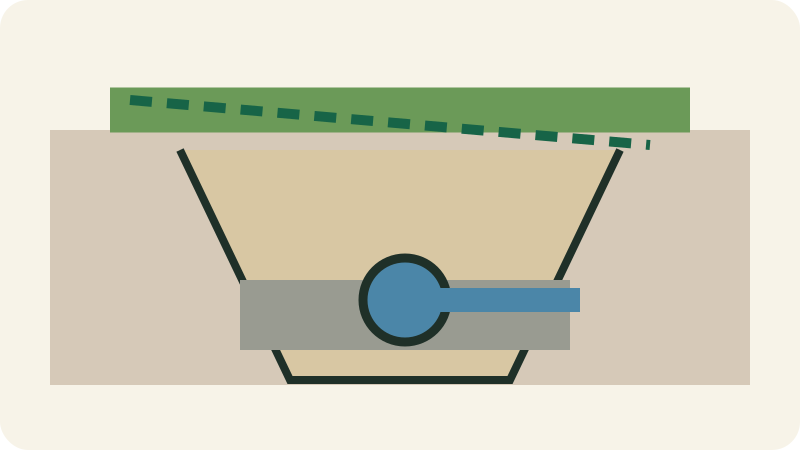
Complete system to oversee
- 1
utility location and water control
- 2
excavation, stability and spoil management
- 3
bearing soil and granular base
- 4
drainage, piping and geotextile
- 5
concrete, reinforcement or structure
- 6
backfill, compaction, grading and restoration
Homeowner can do
- Define the need, expected result, constraints and maximum budget.
- Photograph, measure without dismantling and gather available drawings, invoices and history.
- Verify the authority having jurisdiction, permits, licences, insurance and references.
- Compare quotes using identical scope, products and quantities.
- Prepare access, protect belongings, keep a log and retain photos.
- Observe inspections without touching open, energized or pressurized systems.
- Refuse concealment of work that has not been inspected, tested and photographed.
- Complete written acceptance and retain final payment until corrections and documents are delivered.
Sometimes possible if allowed and competent
- Move furniture and protect unaffected areas if this can be done without exposure.
- Paint or complete cosmetic finishes only after concealed work is accepted, if permitted and within skill.
- Purchase products approved in the quote without substituting system components.
- Perform user maintenance listed in the manual after training and commissioning.
Must be done/verified professionally
- obtain locates, permits and safe excavation strategy
- control water, shoring, machine access and excavation stability
- confirm bearing soil, elevations, slope and granular materials
- install drains, membranes, reinforcement and forms before inspection
- place and protect concrete or compact in lifts with evidence
- backfill without damage, restore grades and document outlets
Never improvise
- Never open an electrical panel, alter gas/refrigerant connections, defeat a safeguard or work energized.
- Never remove a load-bearing element or start excavation without design, stability controls and utility locates.
- Never disturb suspected asbestos/lead material or significant contamination without qualified assessment.
- Never enter an unknown, confined or oxygen-deficient atmosphere with an air-purifying respirator.
- Never backfeed a home through a receptacle or improvise transfer equipment.
What you are actually paying for
Expected professional work
- engineer/geotechnical professional where required
- excavation, concrete or drainage contractor
- utility locate and inspector
obtain locates, permits and safe excavation strategy
control water, shoring, machine access and excavation stability
confirm bearing soil, elevations, slope and granular materials
install drains, membranes, reinforcement and forms before inspection
place and protect concrete or compact in lifts with evidence
backfill without damage, restore grades and document outlets
Ultra-detailed sequence
Eleven milestones from concept to warranty
Each milestone separates action, evidence, acceptance, hold and cost.
1
Define need and criteria
Turn “Plan a concrete driveway” into measurable scope.

What should be done
- Write expected functions, dimensions, capacity, appearance and target service life.
- List what remains, is removed, moved and excluded.
- Define tolerances, tests, documents and warranty before tender.
- Confirm in writing who is responsible, the deliverable and pass criterion for this stage.
- Photograph conditions before, during and after without interfering with safe work.
- Compare work with approved drawings, data sheets and instructions.
- obtain locates, permits and safe excavation strategy
- elevation, slope and outlet
Observe, compare with contract documents, document and request an explanation before any change.
obtain locates, permits and safe excavation strategy
Written or photographic deliverable identified in the contract and added to the homeowner file.
elevation, slope and outlet
Do not proceed or conceal this stage before acceptance, testing and applicable inspection.
Deviation from drawings, unknown condition, damage, leak, movement, odour, alarm or uncontrolled risk.
Any quantity variance, concealed condition or substitution must become a priced change order before execution.
2
Survey and diagnose existing conditions
Avoid pricing from invisible assumptions.

What should be done
- Survey dimensions, slopes, levels, access, services and damage.
- Use relevant non-destructive inspections before opening.
- Identify suspect materials, moisture, corrosion, cracks or recurring defects.
- Confirm in writing who is responsible, the deliverable and pass criterion for this stage.
- Photograph conditions before, during and after without interfering with safe work.
- Compare work with approved drawings, data sheets and instructions.
- control water, shoring, machine access and excavation stability
- density/compaction or documented method
Observe, compare with contract documents, document and request an explanation before any change.
control water, shoring, machine access and excavation stability
Written or photographic deliverable identified in the contract and added to the homeowner file.
density/compaction or documented method
Do not proceed or conceal this stage before acceptance, testing and applicable inspection.
Deviation from drawings, unknown condition, damage, leak, movement, odour, alarm or uncontrolled risk.
Any quantity variance, concealed condition or substitution must become a priced change order before execution.
3
Design and obtain approvals
Approve the solution before purchasing or demolition.
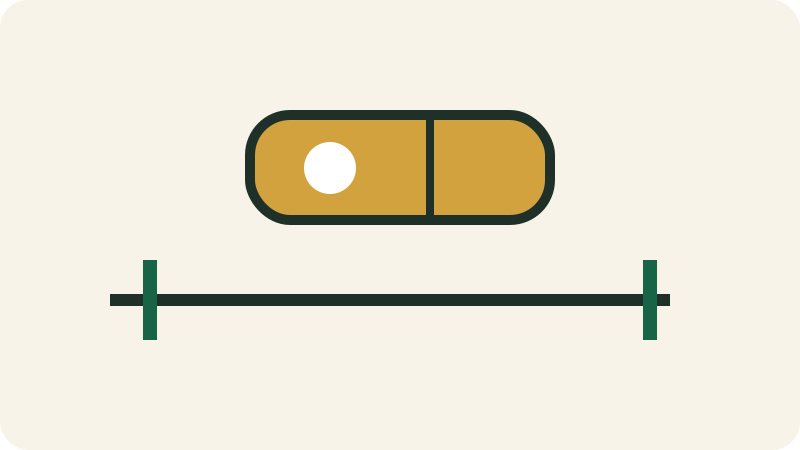
What should be done
- Confirm adopted code edition, local bylaws and required inspections.
- Obtain drawings, details, calculations or equipment selection from the competent person.
- Verify easements, boundaries, warranty, insurance and manufacturer requirements.
- Confirm in writing who is responsible, the deliverable and pass criterion for this stage.
- Photograph conditions before, during and after without interfering with safe work.
- Compare work with approved drawings, data sheets and instructions.
- confirm bearing soil, elevations, slope and granular materials
- reinforcement, thickness and cover before concrete
Observe, compare with contract documents, document and request an explanation before any change.
confirm bearing soil, elevations, slope and granular materials
Written or photographic deliverable identified in the contract and added to the homeowner file.
reinforcement, thickness and cover before concrete
Do not proceed or conceal this stage before acceptance, testing and applicable inspection.
Deviation from drawings, unknown condition, damage, leak, movement, odour, alarm or uncontrolled risk.
Any quantity variance, concealed condition or substitution must become a priced change order before execution.
4
Compare quotes and contract
Compare identical scope and allocate risk.

What should be done
- Require quantities, units, products, hours/crew, equipment, permits and exclusions.
- Identify allowances, contingency, concealed conditions and change process.
- Tie schedule and payments to verifiable milestones.
- Confirm in writing who is responsible, the deliverable and pass criterion for this stage.
- Photograph conditions before, during and after without interfering with safe work.
- Compare work with approved drawings, data sheets and instructions.
- install drains, membranes, reinforcement and forms before inspection
- functional drainage before backfill
Observe, compare with contract documents, document and request an explanation before any change.
install drains, membranes, reinforcement and forms before inspection
Written or photographic deliverable identified in the contract and added to the homeowner file.
functional drainage before backfill
Do not proceed or conceal this stage before acceptance, testing and applicable inspection.
Deviation from drawings, unknown condition, damage, leak, movement, odour, alarm or uncontrolled risk.
Any quantity variance, concealed condition or substitution must become a priced change order before execution.
5
Mobilize, protect and make safe
Prevent damage and exposure before opening.

What should be done
- Isolate area, protect occupants and control dust, water, weather and access.
- Verify shutdowns, lockout, utility locates and temporary stability.
- Confirm waste, delivery, equipment and emergency plan.
- Confirm in writing who is responsible, the deliverable and pass criterion for this stage.
- Photograph conditions before, during and after without interfering with safe work.
- Compare work with approved drawings, data sheets and instructions.
- place and protect concrete or compact in lifts with evidence
- elevation, slope and outlet
Observe, compare with contract documents, document and request an explanation before any change.
place and protect concrete or compact in lifts with evidence
Written or photographic deliverable identified in the contract and added to the homeowner file.
elevation, slope and outlet
Do not proceed or conceal this stage before acceptance, testing and applicable inspection.
Deviation from drawings, unknown condition, damage, leak, movement, odour, alarm or uncontrolled risk.
Any quantity variance, concealed condition or substitution must become a priced change order before execution.
6
Open and confirm concealed conditions
Validate design after exposure without improvising.

What should be done
- Use limited openings and preserve references before broad demolition.
- Compare actual conditions with assumptions and notify before any change.
- Document damage, dimensions, services and materials with scale and location.
- Confirm in writing who is responsible, the deliverable and pass criterion for this stage.
- Photograph conditions before, during and after without interfering with safe work.
- Compare work with approved drawings, data sheets and instructions.
- backfill without damage, restore grades and document outlets
- density/compaction or documented method
Observe, compare with contract documents, document and request an explanation before any change.
backfill without damage, restore grades and document outlets
Written or photographic deliverable identified in the contract and added to the homeowner file.
density/compaction or documented method
Do not proceed or conceal this stage before acceptance, testing and applicable inspection.
Deviation from drawings, unknown condition, damage, leak, movement, odour, alarm or uncontrolled risk.
Any quantity variance, concealed condition or substitution must become a priced change order before execution.
7
Execute the primary system
Install components in the approved sequence.
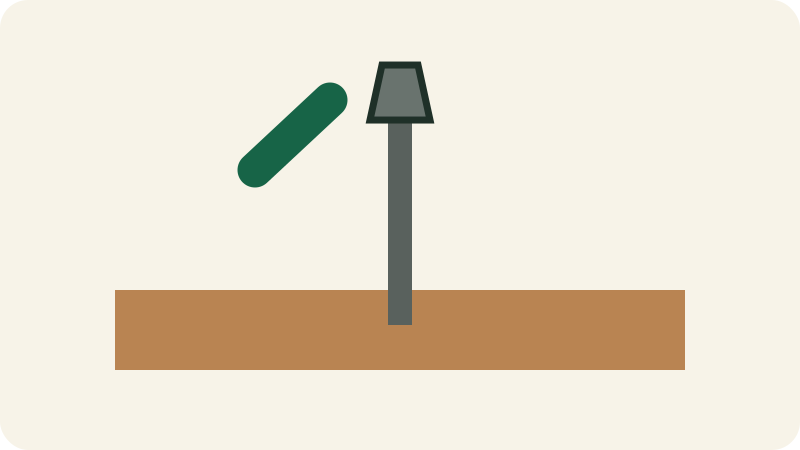
What should be done
- Use only compatible approved products, accessories and fasteners.
- Respect interfaces, supports, clearances, slopes and service access.
- Document every substitution and its warranty impact.
- Confirm in writing who is responsible, the deliverable and pass criterion for this stage.
- Photograph conditions before, during and after without interfering with safe work.
- Compare work with approved drawings, data sheets and instructions.
- obtain locates, permits and safe excavation strategy
- elevation, slope and outlet
Observe, compare with contract documents, document and request an explanation before any change.
obtain locates, permits and safe excavation strategy
Written or photographic deliverable identified in the contract and added to the homeowner file.
elevation, slope and outlet
Do not proceed or conceal this stage before acceptance, testing and applicable inspection.
Deviation from drawings, unknown condition, damage, leak, movement, odour, alarm or uncontrolled risk.
Any quantity variance, concealed condition or substitution must become a priced change order before execution.
8
Inspect and test before concealment
Prove concealed work before covering it.
What should be done
- Clean enough to see joints, fasteners, devices and defects.
- Perform specified tests with identified instruments and dated results.
- Obtain inspection/approval and photograph every interface before concealment.
- Confirm in writing who is responsible, the deliverable and pass criterion for this stage.
- Photograph conditions before, during and after without interfering with safe work.
- Compare work with approved drawings, data sheets and instructions.
- control water, shoring, machine access and excavation stability
- density/compaction or documented method
Observe, compare with contract documents, document and request an explanation before any change.
control water, shoring, machine access and excavation stability
Written or photographic deliverable identified in the contract and added to the homeowner file.
density/compaction or documented method
Do not proceed or conceal this stage before acceptance, testing and applicable inspection.
Deviation from drawings, unknown condition, damage, leak, movement, odour, alarm or uncontrolled risk.
Any quantity variance, concealed condition or substitution must become a priced change order before execution.
9
Close, finish and protect
Do not damage the accepted system during finishes.

What should be done
- Verify defects and change orders are resolved before concealment.
- Maintain access, ventilation, drainage, clearances and movement joints.
- Protect finished work until acceptance and repair damage.
- Confirm in writing who is responsible, the deliverable and pass criterion for this stage.
- Photograph conditions before, during and after without interfering with safe work.
- Compare work with approved drawings, data sheets and instructions.
- confirm bearing soil, elevations, slope and granular materials
- reinforcement, thickness and cover before concrete
Observe, compare with contract documents, document and request an explanation before any change.
confirm bearing soil, elevations, slope and granular materials
Written or photographic deliverable identified in the contract and added to the homeowner file.
reinforcement, thickness and cover before concrete
Do not proceed or conceal this stage before acceptance, testing and applicable inspection.
Deviation from drawings, unknown condition, damage, leak, movement, odour, alarm or uncontrolled risk.
Any quantity variance, concealed condition or substitution must become a priced change order before execution.
10
Commission and accept
Measure performance and obtain the final record.
What should be done
- Have every function, safeguard, control, shutdown and maintenance task demonstrated.
- Compare results with contract criteria and create a deficiency list.
- Receive closed permits, reports, warranties, concealed-work photos and spare parts.
- Confirm in writing who is responsible, the deliverable and pass criterion for this stage.
- Photograph conditions before, during and after without interfering with safe work.
- Compare work with approved drawings, data sheets and instructions.
- install drains, membranes, reinforcement and forms before inspection
- functional drainage before backfill
Observe, compare with contract documents, document and request an explanation before any change.
install drains, membranes, reinforcement and forms before inspection
Written or photographic deliverable identified in the contract and added to the homeowner file.
functional drainage before backfill
Do not proceed or conceal this stage before acceptance, testing and applicable inspection.
Deviation from drawings, unknown condition, damage, leak, movement, odour, alarm or uncontrolled risk.
Any quantity variance, concealed condition or substitution must become a priced change order before execution.
11
Monitor after completion
Detect defects early during warranty.
What should be done
- Inspect at 30 days, after the first season and before warranty expiry.
- Record noise, odour, leak, crack, movement, consumption or performance loss.
- Notify in writing with photos and dates rather than hiding the defect.
- Confirm in writing who is responsible, the deliverable and pass criterion for this stage.
- Photograph conditions before, during and after without interfering with safe work.
- Compare work with approved drawings, data sheets and instructions.
- place and protect concrete or compact in lifts with evidence
- elevation, slope and outlet
Observe, compare with contract documents, document and request an explanation before any change.
place and protect concrete or compact in lifts with evidence
Written or photographic deliverable identified in the contract and added to the homeowner file.
elevation, slope and outlet
Do not proceed or conceal this stage before acceptance, testing and applicable inspection.
Deviation from drawings, unknown condition, damage, leak, movement, odour, alarm or uncontrolled risk.
Any quantity variance, concealed condition or substitution must become a priced change order before execution.
Inspection and payment matrix
| Milestone | Criterion | Evidence | Payment |
|---|---|---|---|
| Scope frozen | elevation, slope and outlet | Dated overall pre-work view with location references. | Payment only after evidence and correction of deviations. |
| After diagnosis | density/compaction or documented method | Every side of opened surfaces and concealed conditions. | Payment only after evidence and correction of deviations. |
| Permits/drawings | reinforcement, thickness and cover before concrete | Product labels, models, certifications, lot numbers and invoices. | Payment only after evidence and correction of deviations. |
| After opening | functional drainage before backfill | Rough-in, supports, fasteners, flashings, membranes and devices before concealment. | Payment only after evidence and correction of deviations. |
| Rough-in/system | elevation, slope and outlet | Test readings, instruments, inspection labels and corrections. | Payment only after evidence and correction of deviations. |
| Before concealment | density/compaction or documented method | Final result, transitions, service access and serial numbers. | Payment only after evidence and correction of deviations. |
| Commissioning | reinforcement, thickness and cover before concrete | Dated overall pre-work view with location references. | Payment only after evidence and correction of deviations. |
| Final acceptance | functional drainage before backfill | Every side of opened surfaces and concealed conditions. | Payment only after evidence and correction of deviations. |
Critical tests
- elevation, slope and outlet
- density/compaction or documented method
- reinforcement, thickness and cover before concrete
- functional drainage before backfill
Photo log
- Dated overall pre-work view with location references.
- Every side of opened surfaces and concealed conditions.
- Product labels, models, certifications, lot numbers and invoices.
- Rough-in, supports, fasteners, flashings, membranes and devices before concealment.
- Test readings, instruments, inspection labels and corrections.
- Final result, transitions, service access and serial numbers.
Break down the quote
Compare measurable quantity, complete system, identical products and identical tests.
- 1locates and permits
- 2engineering/geotechnical
- 3excavation and shoring
- 4haulage and disposal
- 5granular materials
- 6drainage and waterproofing
- 7forms and reinforcement
- 8concrete/asphalt
- 9compaction and testing
- 10restoration and contingency
Required fields
- quantity, unit and measurement assumption
- product, model, grade, thickness and certification
- hours, crew, rate or labour allowance
- equipment, mobilization, access and protection
- permits, design, inspections and tests
- delivery, storage and disposal
- allowance, taxes, contingency and exclusions
- schedule, milestones and payment conditions
- labour and manufacturer warranties
- written concealed-condition and change process
Red flags
- lump sum without drawing, quantity or exact product
- permits or inspections called optional without confirmation
- demolition started before hazard characterization
- work concealed before photo, test or inspection
- cheaper substitution without credit or validation
- deposit or payment disproportionate to verifiable work
- verbal or unitemized change order
- no commissioning or closeout file
Questions to ask
- Who designs and assumes responsibility for sizing?
- Which code edition and local requirements are you using?
- Who obtains each permit and schedules each inspection?
- Which work will be subcontracted and to whom?
- Which exact products and system accessories are included?
- Which existing-condition assumptions support the price?
- Which concealed work may I photograph before closure?
- Which tests, values and reports will be delivered?
- Which conditions trigger a change order?
- How do you calculate additional labour, equipment and disposal?
- What milestone schedule do you propose?
- What amount remains until deficiencies are corrected?
- Who protects occupants and controls dust/water/weather?
- What written installation warranty applies?
- Which documents and spare parts will be delivered?
Payments
- Deposit limited by local rules and identified actual orders.
- Payment after each milestone, evidence and inspection—not merely by date.
- No payment for concealed work before tests and photos.
- Retain final amount until corrections, closed permits and documents.
- Verify provincial holdback, lien and release rules.
Change orders
- Describe the condition with photos before altering it.
- Obtain minimum-compliant, recommended and optional-upgrade options.
- Itemize quantities, materials, hours, equipment, delay and credit.
- Obtain designer/inspector approval if the solution changes.
- Authorize in writing before work except documented emergency action.
- Update cumulative budget and schedule.
Required closeout file
- Closed permits and inspection reports.
- As-built drawings and concealed-work photos.
- Test and commissioning reports with values.
- Detailed invoices, releases and subcontractor list.
- Data sheets, certifications, warranties and serial numbers.
- Manuals, maintenance schedule and spare parts.
- Signed and closed deficiency list.
- Service contacts and emergency procedure.
Post-work monitoring
- Inspection at 30 days, after first season and before warranty expiry.
- Follow manufacturer schedule and keep maintenance evidence.
- Monitor leaks, cracks, movement, noise, odour, alarms and consumption.
- Do not hide a recurring defect with a cosmetic repair.
- Reassess after damage, alteration or performance loss.
Inspection
Full defect libraryDefects to recognize before, during and after this project
Defects homeowners often encounter on this type of project. Some records use credited real photos; others use conceptual references. Symptoms and real-world context remain the reference.
Leaning, cracking or moving retaining wall
A retaining wall holds soil and sometimes loads; bulging, overturning or blocked drainage can precede failure.
- Leaning wall, bulge, open joints, shifted base, water or soil pressure.
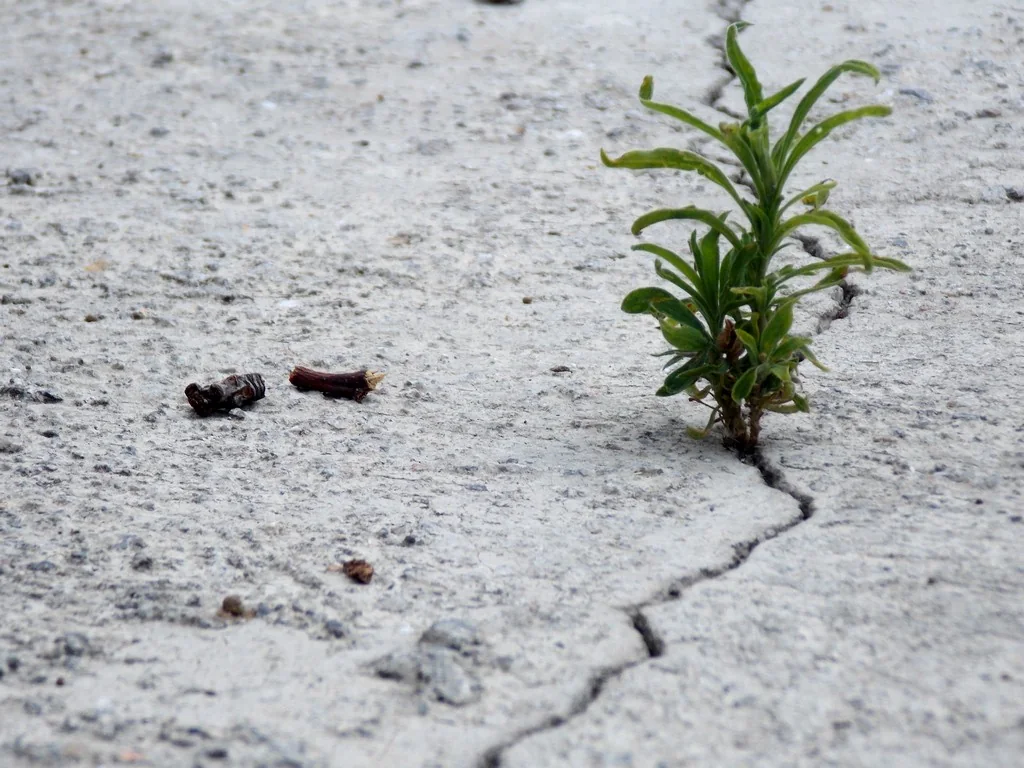
Foundation cracks and differential movement
Not all cracks are equal: location, width, displacement and associated moisture guide urgency.
- Vertical, diagonal or horizontal cracks.
- Surface displacement, sticking doors, sloped floors or repeated new cracks.
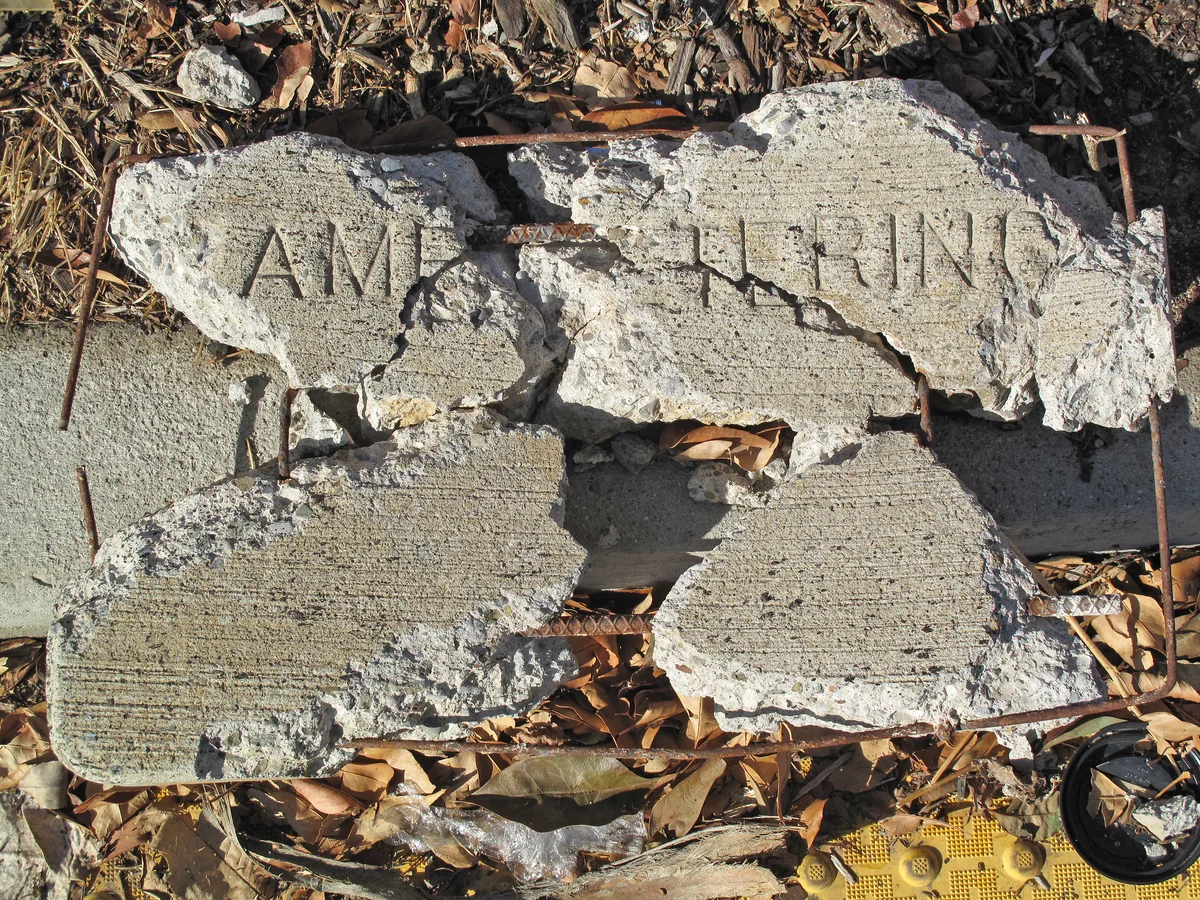
Spalling, scaling or exposed reinforcing steel
Concrete scaling can result from freeze-thaw, salts, corroding reinforcement or poor mix/finishing.
- Peeling surface, exposed aggregate, detached pieces or rust at reinforcing steel.
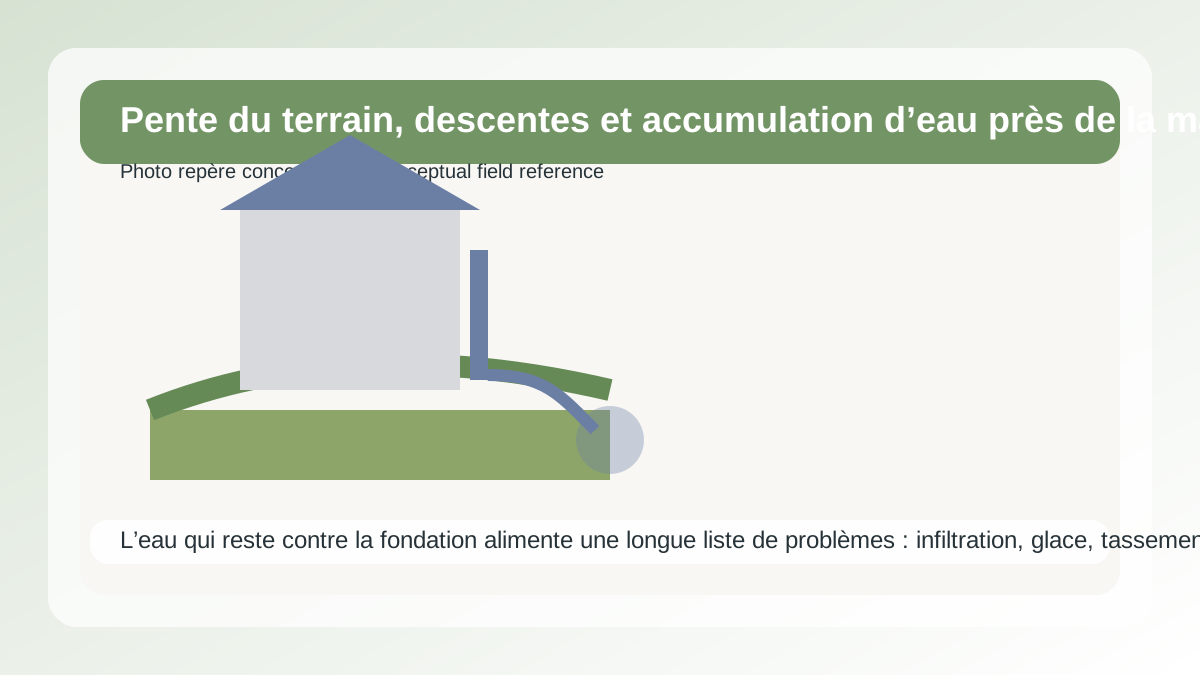
Grading, downspouts and water collecting near the house
Water that stays against the foundation feeds a long list of issues: leakage, ice, settlement, rot and premature deterioration.
- Persistent puddles, splash marks on lower cladding, sunken soil near the home.
- A downspout discharging at the wall, erosion, full window wells or recurring frost.
Verified references
- National Building Code of Canada 2025Canada model code
- Model code adoption across CanadaProvincial and territorial adoption
- CCOHS — Respirator SelectionCanadian respirator selection and program guidance
- Health Canada — Medical masks and respirators: information for usersN, R and P filter classifications and authentic respirators
- NIOSH — Respirator Types and UseFit testing, use and respirator types
- NIOSH — Identifying NIOSH Approved RespiratorsApproval label and TC number verification
Related path
Continue with the right tools
These links connect this page to the next useful checks and decisions without repeating the full content.
Coordinate site and utilitiesConnect access, grading, drainage, excavation, utilities and interfaces before work.Open →Check exterior permitsIdentify triggers related to structures, pools, drainage and site changes.Open →Plan a garage buildStructure footprint, slab, enclosure, utilities, budget and closeout.Open →Screen site constraintsOrganize official sources before fixing layout or investment.Open →Compare equipment rentalsReview specialized equipment, intended uses and dated rental observations.Open →
Manage the project through closeout
V16
Advanced diagnostics to cross-check
V16 connects water, soil, climate, safety, materials and seasonal use to existing projects.
V17
Specialized systems to cross-check
V17 completes gas, soil, water, fire, climate and structural interfaces.
V33
Invisible constraints before work
V33 checks electrical, legal, environmental and climate constraints that can block a project before demolition starts.