What you will know after this guide
- Detection types
- Where to place
- Automatic shutoff
- False alerts and tests
Detection types
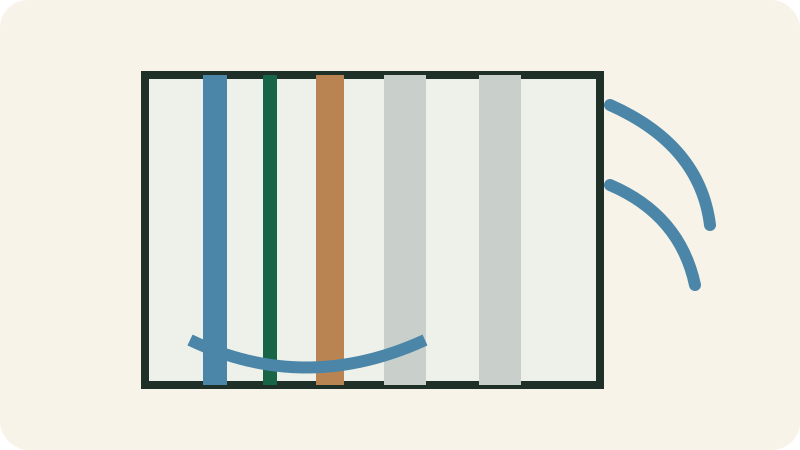
- Point sensor: water on the floor at one location.
- Sensing cable: covers a perimeter or long area.
- Flow monitoring: detects unusual or continuous consumption.
- Pressure/acoustic: some systems analyze leak signatures.
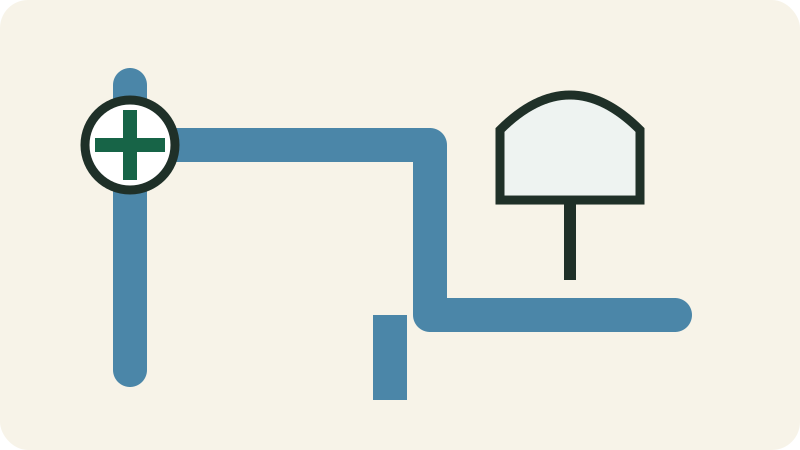
- Motorized valve: closes the supply after a rule or alert.
Where to place
Place at the water heater, washer, dishwasher, plumbed refrigerator, sinks, toilet, sump, mechanical room, softener and low points. The sensor should be accessible, remain at floor level and not be moved during cleaning.
Automatic shutoff
Verify diameter, material, pressure, power, fail position, manual control, outage behaviour, freeze detection and compatibility with fire, well, irrigation or hydronic systems. Main-line installation may be regulated.
False alerts and tests
Set thresholds that accommodate showers, irrigation and pool filling. Test each sensor, notification, battery and shutoff per manufacturer. Ensure all occupants know how to restore water and identify a real leak.
Insurance record
Keep purchase, installation, test, maintenance and photo records. Ask the insurer which systems qualify before buying; a discount is not guaranteed and does not replace proper coverage.
Verified references
- Insurance Bureau of Canada — How to drive down home insurance ratesCanada; checked 2026-08-02